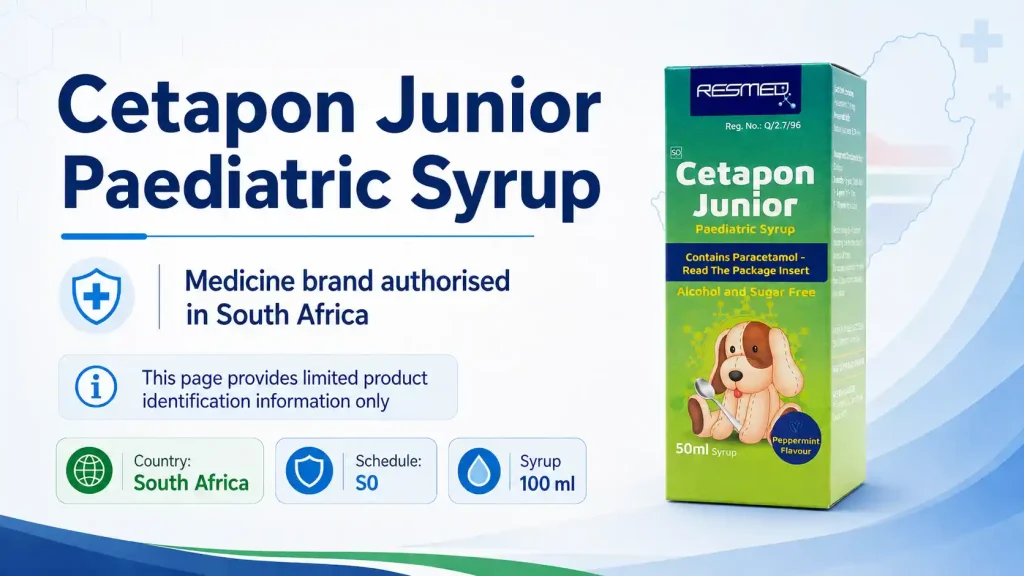
scheduling status : S0
When your child is unwell with a fever, headache, toothache, earache or general aches and pains, it is natural to want to help them feel better as quickly as possible. CETAPON JUNIOR PAEDIATRIC SYRUP is a medicine specially formulated for children to help relieve mild to moderate pain and reduce fever.
This article explains what CETAPON JUNIOR PAEDIATRIC SYRUP is, how it works, how to use it safely, possible side effects, and important information every parent and caregiver should know before giving this medicine to a child.
Understanding how to use medicine correctly can help ensure your child receives safe and effective relief when they need it most.
What Is CETAPON JUNIOR PAEDIATRIC SYRUP?
CETAPON JUNIOR PAEDIATRIC SYRUP contains paracetamol, a widely used medicine for relieving pain and reducing fever.
Each 5 ml contains 120 mg of paracetamol.
The syrup is:
- Sugar free
- Tartrazine free
- Pleasant tasting
- Easy to administer to children
The product is supplied as a green syrupy liquid with a peppermint smell.
What Is CETAPON JUNIOR PAEDIATRIC SYRUP Used For?
CETAPON JUNIOR PAEDIATRIC SYRUP is used for the relief of mild to moderate pain and fever.
It may be used to help relieve symptoms associated with:
- Fever
- Headache
- Toothache
- Earache
- Pain associated with colds and flu
- General aches and pains
The medicine helps children feel more comfortable while the body recovers from illness or minor painful conditions.
Understanding Fever in Children
Fever is one of the most common symptoms experienced during childhood illnesses.
A fever occurs when the body’s temperature rises above normal levels. In many cases, fever is a sign that the body is responding to an infection.
Children with a fever may experience:
- Feeling hot
- Irritability
- Tiredness
- Reduced appetite
- Restlessness
- Difficulty sleeping
Although fever can be uncomfortable, it is often part of the body’s normal defence system.
Paracetamol helps lower body temperature and may improve comfort while the child recovers.
Understanding Pain in Children
Pain can occur for many reasons.
Common causes include:
- Teething
- Ear infections
- Sore throats
- Headaches
- Minor injuries
- Flu-like illnesses
Pain can affect sleep, eating habits, mood and overall wellbeing.
Paracetamol works to relieve pain and may help children rest and recover more comfortably.
How Does Paracetamol Work?
Paracetamol helps reduce fever and relieve pain.
Although the exact way it works is not fully understood, paracetamol acts within the body to reduce the sensation of pain and lower elevated body temperature.
Unlike some other pain-relieving medicines, paracetamol is generally gentle on the stomach when used according to the recommended dosage instructions.
Before Giving CETAPON JUNIOR PAEDIATRIC SYRUP
Do not give CETAPON JUNIOR PAEDIATRIC SYRUP if your child:
- Is allergic to paracetamol
- Is allergic to any ingredient in the product
- Has severe liver impairment
Always inform your healthcare professional about any existing medical conditions before starting treatment.
Important Warnings and Precautions
Paracetamol May Be Fatal In Overdose
One of the most important safety warnings associated with paracetamol is that overdose can be extremely dangerous.
Paracetamol may be fatal in overdose.
If an overdose is suspected:
- Contact a doctor immediately.
- Contact a hospital immediately.
- Contact a Poison Centre immediately.
This applies even if the child appears well and has no symptoms.
Serious liver damage may develop after overdose, and symptoms may not appear immediately.
Never Exceed The Recommended Dose
Giving more than the recommended dose may cause severe liver damage.
Always:
- Measure doses carefully.
- Follow age-appropriate dosing recommendations.
- Avoid giving doses too frequently.
- Keep track of all doses administered.
Never assume that giving more medicine will provide faster relief.
Avoid Multiple Paracetamol Products
Many medicines for colds, flu and pain relief contain paracetamol.
Giving more than one paracetamol-containing medicine at the same time may result in accidental overdose.
Always check labels carefully.
If you are unsure whether another medicine contains paracetamol, ask your pharmacist.
Persistent Symptoms Require Medical Advice
Consult a healthcare professional if:
- Fever persists.
- Fever worsens.
- Pain persists.
- Pain worsens.
- New symptoms appear.
- Redness or swelling develops.
These symptoms may indicate an underlying condition that requires medical attention.
Long-Term Use
Do not administer continuously for more than 10 days without consulting a doctor.
Children who require prolonged treatment should be medically assessed.
Children Requiring Special Care
Use with caution in children with:
- Liver disease
- Kidney disease
- Chronic malnutrition
- Dehydration
Healthcare professionals should be informed about any medical condition that may affect medicine use.
Severe Skin Reactions
Severe skin reactions have been reported with paracetamol-containing medicines.
Examples include:
- Stevens-Johnson syndrome (SJS)
- Toxic epidermal necrolysis (TEN)
- Acute generalised exanthematous pustulosis (AGEP)
- Drug reaction with eosinophilia and systemic symptoms (DRESS)
- Drug-induced hypersensitivity syndrome (DIHS)
- Fixed drug eruptions (FDE)
Stop treatment immediately and seek urgent medical attention if your child develops:
- Severe rash
- Blistering skin
- Peeling skin
- Mouth sores
- Widespread skin reactions
Although these reactions are rare, they can be serious.
How To Give CETAPON JUNIOR PAEDIATRIC SYRUP
CETAPON JUNIOR PAEDIATRIC SYRUP is taken by mouth.
The correct dose depends on the child’s age.
Recommended Dosage
| Age Group | Dose |
|---|---|
| 3 months to 1 year | 2.5 ml to 5 ml |
| 1 to 6 years | 5 ml to 10 ml |
| 7 to 12 years | Up to 20 ml |
The dose may be repeated every 3 to 4 hours if necessary.
Do not exceed 4 doses in 24 hours.
Do not exceed the recommended dose.
Tips For Accurate Dosing
To ensure safe administration:
- Use a proper medicine measure.
- Use an oral syringe if supplied.
- Read measurements carefully.
- Never use household teaspoons.
Accurate dosing helps reduce the risk of underdosing or overdosing.
What To Do If A Dose Is Missed
Because the medicine is generally used when required for pain or fever, a missed dose is usually not a concern.
Do not give extra medicine to make up for a missed dose.
Continue according to the recommended dosing schedule if further doses are required.
Medicine Interactions
Some medicines may interact with paracetamol.
Examples include:
- Warfarin and other anticoagulants
- Metoclopramide
- Cholestyramine
- Rifampicin
- Isoniazid
- Flucloxacillin
- Zidovudine
- Certain anti-epileptic medicines
Always inform your doctor or pharmacist about:
- Prescription medicines
- Over-the-counter medicines
- Herbal products
- Traditional medicines
This helps reduce the risk of medicine interactions.
Pregnancy And Breastfeeding
The safety and efficacy of CETAPON JUNIOR PAEDIATRIC SYRUP during pregnancy and breastfeeding have not been established. This Medicine is for childrens .
Consult a healthcare professional before use during pregnancy or breastfeeding.
Effects On Driving And Using Machinery
CETAPON JUNIOR PAEDIATRIC SYRUP has no or negligible influence on the ability to drive and use machinery.
Possible Side Effects
Like all medicines, CETAPON JUNIOR PAEDIATRIC SYRUP may cause side effects, although not everybody experiences them.
Most children tolerate the medicine well when used correctly.
Side Effects Table
| Body System | Possible Side Effects |
|---|---|
| Blood and lymphatic system | Agranulocytosis, thrombocytopenia, leucopoenia, pancytopenia, neutropenia, anaemia |
| Metabolism and nutrition | Pyroglutamic aciduria, high anion gap metabolic acidosis |
| Ear disorders | Hearing loss |
| Cardiovascular system | Increased risk of hypertension |
| Gastrointestinal system | Nausea, vomiting, pancreatitis |
| Liver and biliary system | Hepatitis |
| Skin and subcutaneous tissue | Dermatitis, skin rash, Stevens-Johnson syndrome, toxic epidermal necrolysis, AGEP, DRESS, DIHS, fixed drug eruptions |
| Renal and urinary system | Renal colic, renal failure, sterile pyuria, nephropathy |
| Investigations | Increased transaminases |
Allergic Reactions
Stop treatment and seek medical attention immediately if your child develops:
- Skin rash
- Swelling of the face
- Swelling of the lips
- Swelling of the tongue
- Difficulty breathing
These may be signs of a serious allergic reaction.
Overdose
Paracetamol overdose is a medical emergency.
Early symptoms may include:
- Nausea
- Vomiting
- Loss of appetite
- Abdominal pain
- Pallor
More serious complications may develop later, including:
- Liver damage
- Kidney failure
- Metabolic acidosis
- Coma
- Death
Immediate medical attention is essential if overdose is suspected.
Do not wait for symptoms to appear.
Storage Instructions
Store in a cool place at or below 25 °C.
Protect from light.
Keep the bottle tightly closed when not in use.
Keep out of reach of children.
Do not use the medicine after the expiry date shown on the packaging.
Helpful Advice For Parents And Caregivers
When your child is ill:
- Encourage rest.
- Encourage fluid intake.
- Monitor temperature regularly.
- Record medicine doses given.
- Follow dosing instructions carefully.
- Seek medical advice if symptoms persist.
Keeping a simple record of doses can help prevent accidental overdosing and ensure safe use.
Frequently Asked Questions
Can CETAPON JUNIOR PAEDIATRIC SYRUP Be Taken With Food?
Yes. The medicine may be taken with or without food.
Can I Give Another Paracetamol Medicine At The Same Time?
No. Always check medicine labels carefully to avoid accidental overdose.
How Long Can I Use CETAPON JUNIOR PAEDIATRIC SYRUP?
Do not administer continuously for more than 10 days without consulting a doctor.
What If My Child Still Has A Fever?
If fever persists or worsens, seek medical advice.
Final Advice For Parents
CETAPON JUNIOR PAEDIATRIC SYRUP is a trusted paracetamol medicine used for the relief of mild to moderate pain and fever in children. When used according to the recommended instructions, it can help improve comfort and support recovery from common childhood illnesses.
Always use the correct dose, measure carefully, avoid giving other paracetamol-containing products at the same time, and seek immediate medical help if overdose is suspected.
By following these important safety guidelines, parents and caregivers can use CETAPON JUNIOR PAEDIATRIC SYRUP responsibly and effectively to help children feel better when they need it most.